NASA’s Advanced Composite Solar Sail System (ACS3), an experiment to test an alternative to rocket-fueled spacecraft, has successfully deployed its sail! This space sailboat will explore how we can propel future spacecraft through the cosmos by harnessing the momentum generated as light collides with a surface. Although ACS3 launched on April 23, 2024, it recently expanded its sails as planned on August 29, 2024. Depending on the results of this cosmic endeavor, the spacecraft of the future just may be powered by sunlight instead of conventional fuels.
Observing ACS3 from Earth
Luckily for us, those of us who are stuck with our feet on the ground can still engage in the experiment. From NASA’s most recent blog post about the mission:
The Advanced Composite Solar Sail System spacecraft orbits Earth at approximately twice the altitude of the International Space Station. From above, the sail will appear as a square, with an area of approximately 860 square feet (80 square meters) – about half the size of a tennis court. Now, with the sail fully extended, the Solar Sail System may be visible to some keen skywatchers on Earth who look up at the right time. Stay tuned to NASA.gov and @NASAAmes on social media for updates on how to catch the spacecraft passing over your area.
Curious if you can spot it from where you’re at on Earth? Visit our Scientific Events Prediction page to find out! Watch the video below to learn how to plan an observation from your location. You can also check out the visibility map below which is updated every 6 hours to show which parts of the world can see ACS3.
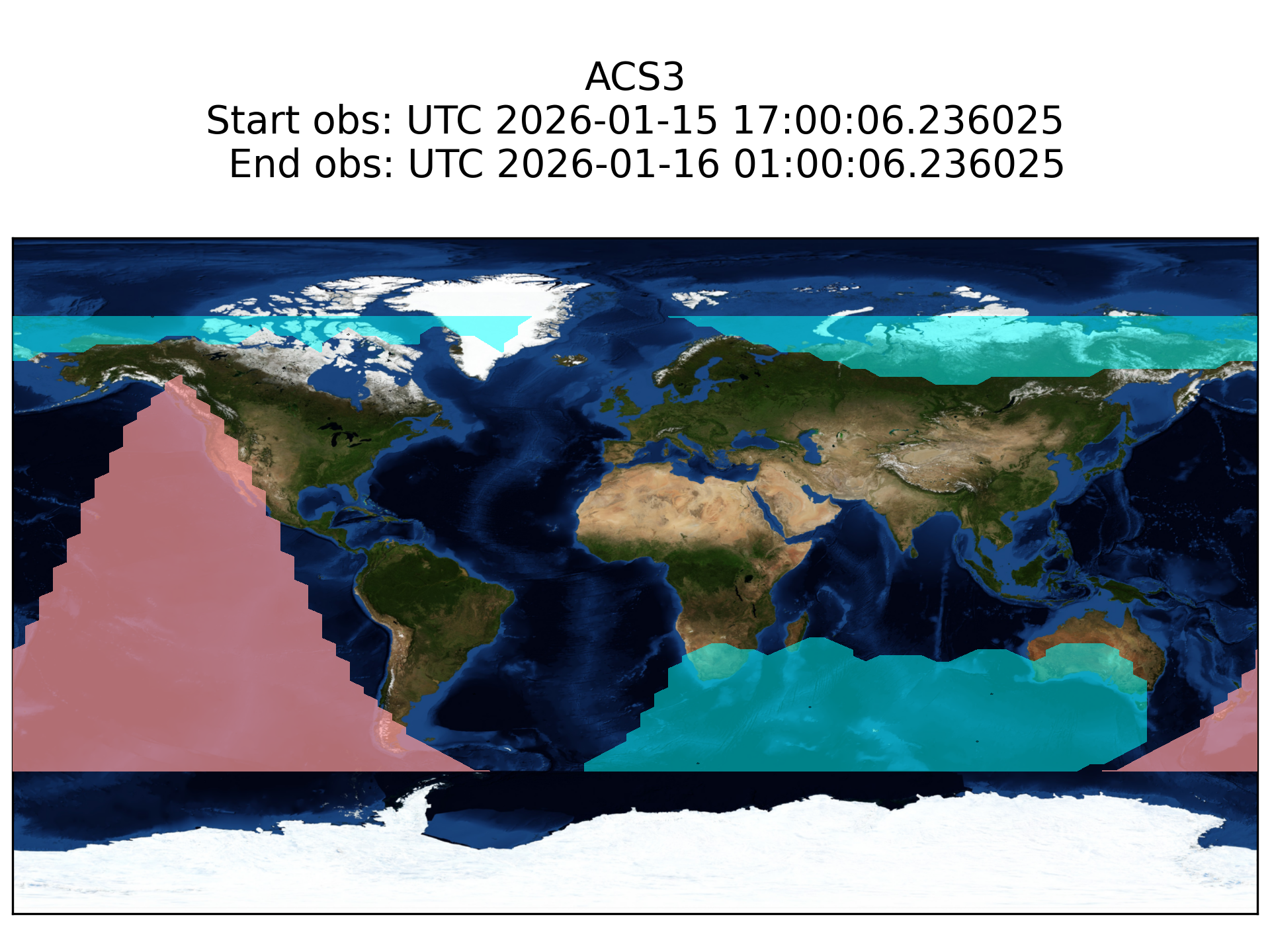
A visibility map for NASA’s ACS3. Anywhere region in the blue shaded area can see ACS3 during the times listed at the top of the map. Pink shading denotes daytime.
Solar Sails Spotted with Citizen Astronomers
The Unistellar Network has been observing ACS3 since the beginning of August, and they’re keeping their sights on it to watch how its appearance and orbit changes. Several Unistellar Citizen Astronomers successfully observed it just before the deployment and right after the sails’ expansion — you can see their videos below, which show that ACS3 is now over 5 times brighter than it was before it “set sail”! More observations will be recorded in the upcoming days with the goal of measuring the change of orbit as NASA engineers are steering it.
You too can take part in this observing adventure by following the instructions above. See below how the Unistellar Network has been working hard to track NASA’s ACS3 – join in the fun today to be part of this historic experiment!


A detection of ACS3 by Mario Billiani before deployment (top) and the shortly after deployment on August 29, 2024 (bottom). The magnitudes measured from these observations are 8.4 before deployment, and 6.1 after the sailed deployed – thats approximately a 2.3 magnitude decrease and therefore an increase in brightness!
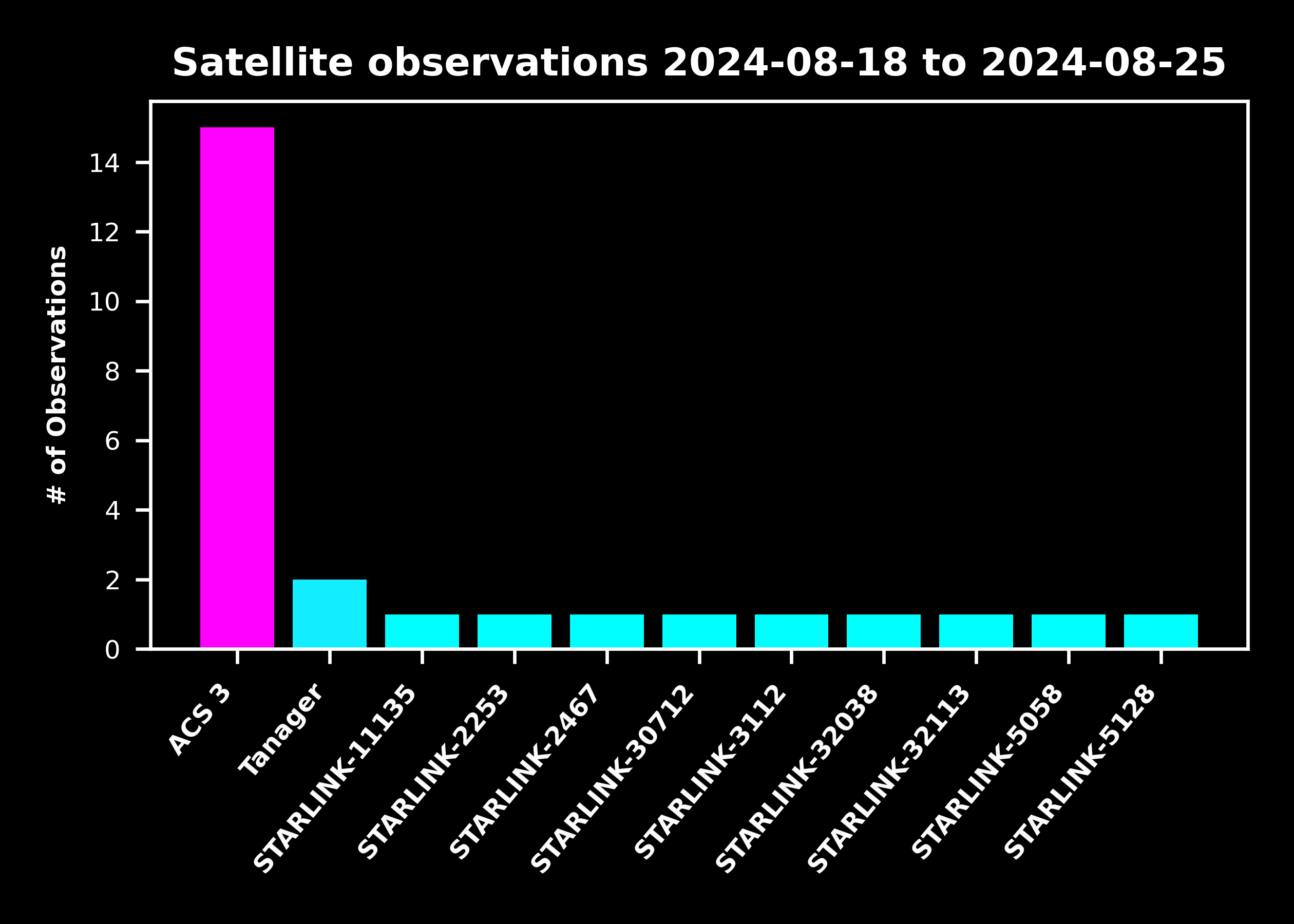
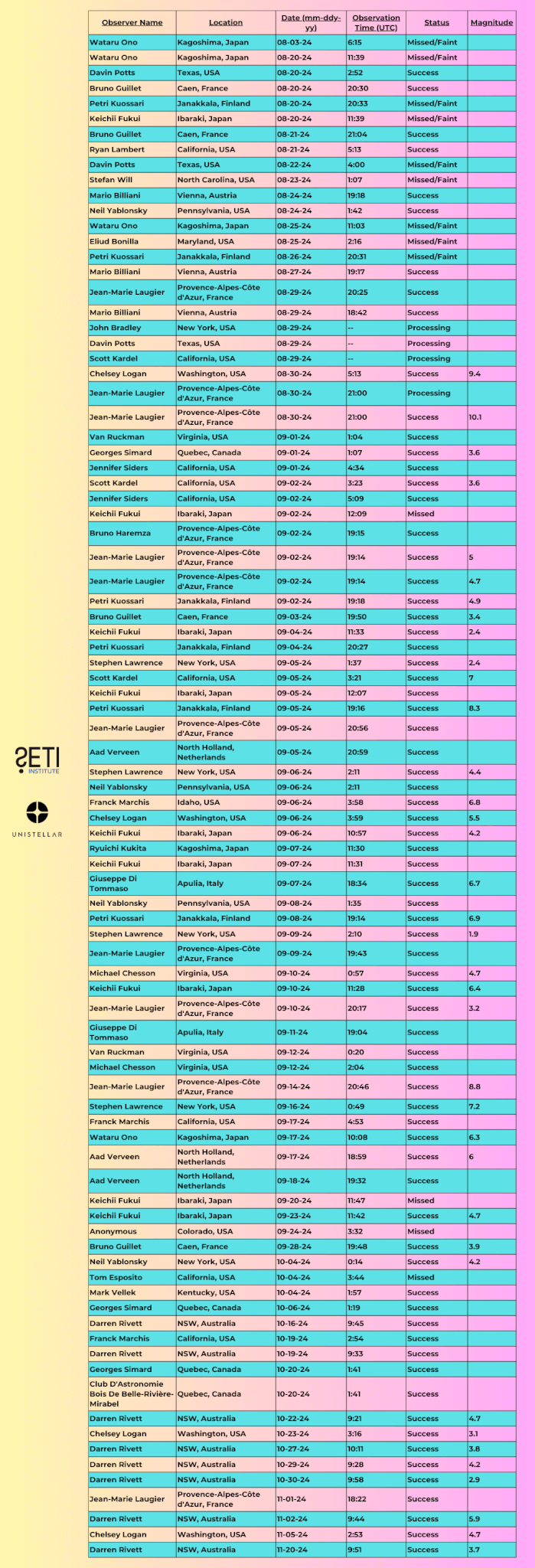
Since ACS3 is visible all across the world, it has quickly become a popular target among satellite hunters. You can see in the chart above and the table below just how many Citizen Astronomers are actively tracking this target.