

Cometary Activity
Missions
Find up-to-the-minute visibilities and deeplinks for comet targets on the Comet Ephemeris page.
MISSION 10P
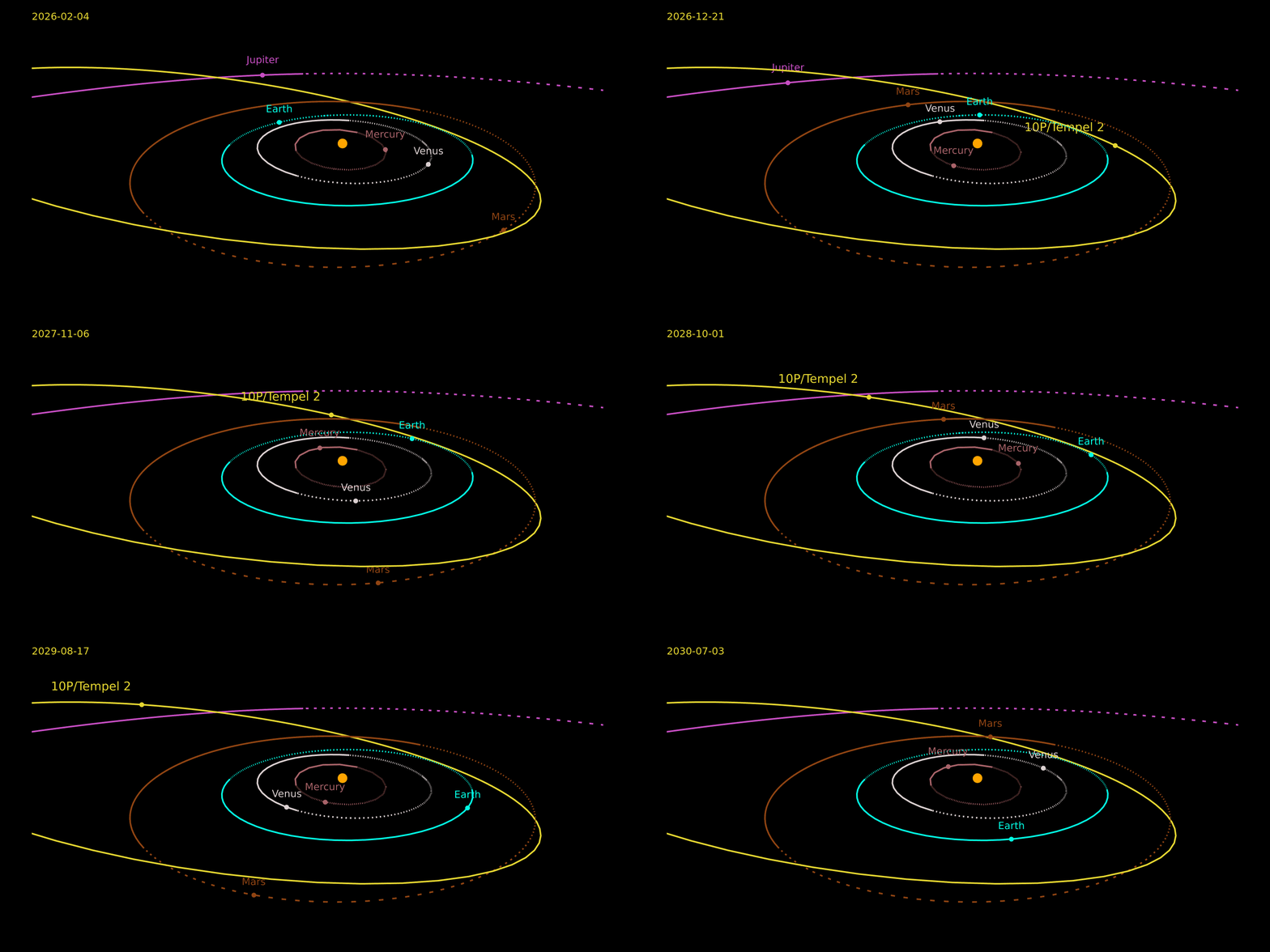
10P/Tempel 2 is a Jupiter-family comet that reached perihelion in early August 2026. Despite its active coma, the comet’s nucleus has a well-measured rotation period of about 8.95 hours. This mission will investigate whether the global Unistellar network can recover the nucleus rotation using eVscope photometry, helping demonstrate the potential of citizen science observations to study active comet nuclei.
To observe your target:
Select your comet from the App Catalog (see the Tutorial → During Observation → A. The Comet is in the Catalog).
In the Recording field, enter the following settings:
Record duration: 20 min
Exposure time: 3971 ms
Gain: 25 db
MISSION 220P
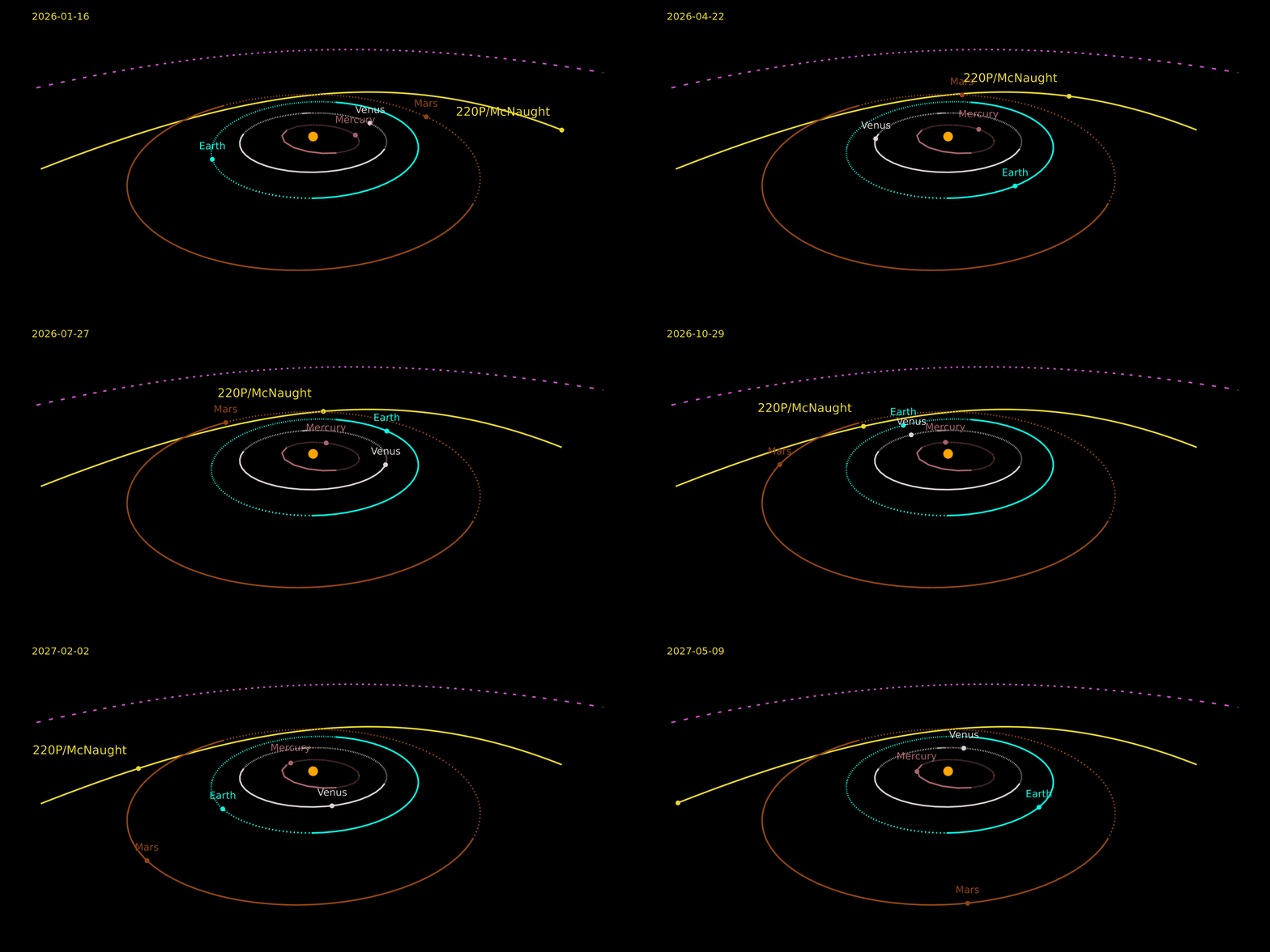
220P/McNaught is a 5.5-year periodic comet discovered in 2004 by Robert H. McNaught. During its 2026 return, the comet experienced a dramatic outburst in late May, brightening by roughly 7 magnitudes in less than a day and becoming more than 600 times brighter than before. In fact, there is evidence of new outburst since then. Continued observations throughout this apparition will help track how the comet’s activity evolves after this event.
To observe your target:
Use your smartphone to generate a deep link using the comet ephemeris. (For details, see the Tutorial → During Observation → B. The Comet is not in the Catalog).
MISSION R3
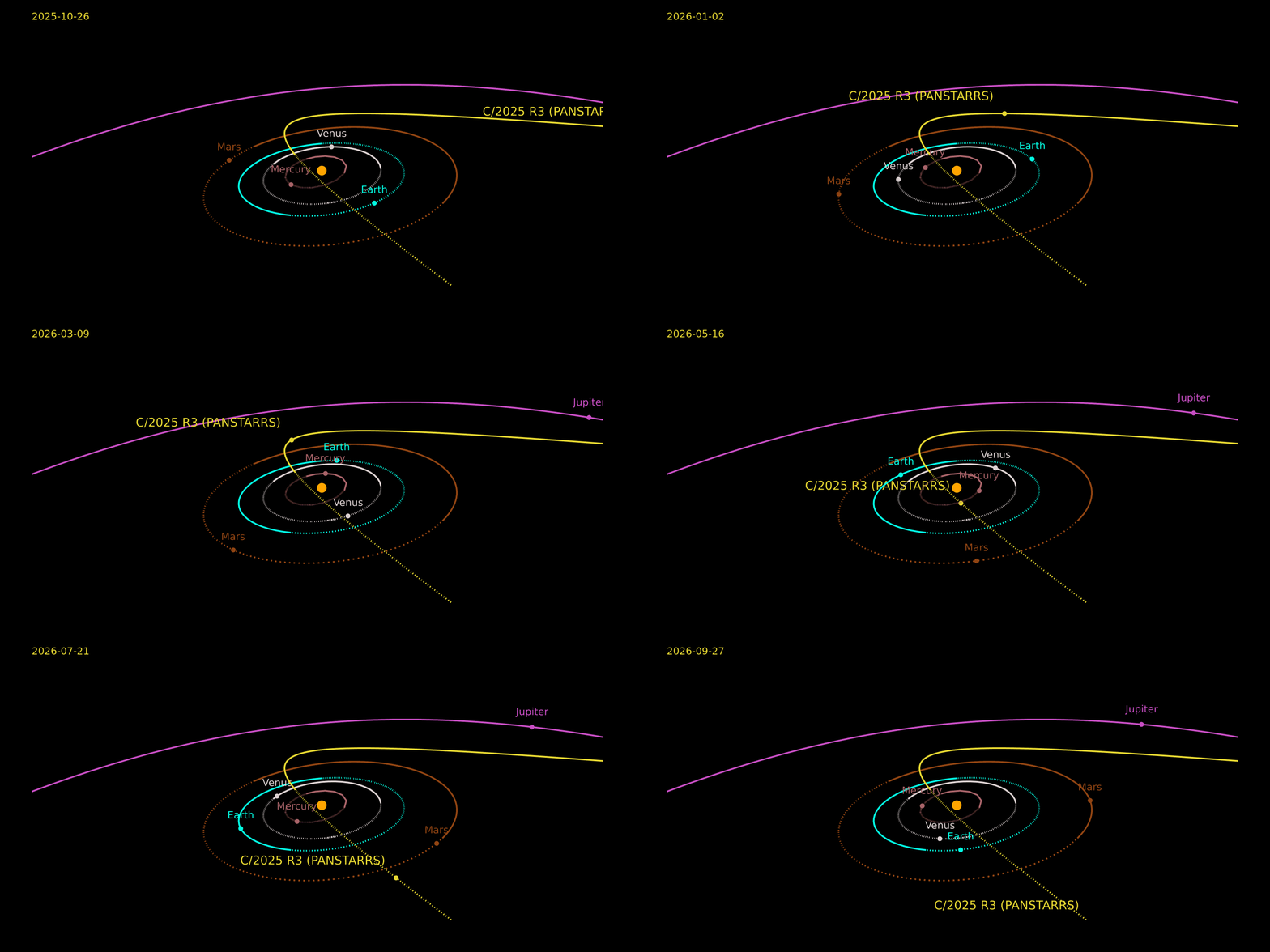
C/2025 R3 (PanSTARRS) is a long-period comet discovered on September 8, 2025, by the Pan-STARRS survey in Hawaiʻi. It reached perihelion in mid-April 2026, when forward scattering helped boost its apparent brightness, making it visible in binoculars and even to the naked eye under very dark skies. The comet is now receding from the inner solar system and gradually fading. Continued observations will help reveal the full picture of its activity and how it evolved throughout its passage.
To observe your target:
Use your smartphone to generate a Deep Link with our comet ephemeris tool. Make at least one recording.For detailed instructions, see the Tutorial → During Observation → B. The Comet is NOT in the App Catalog.
MISSION 29P
29P/Schwassmann-Wachmann 1 is a Centaur/comet transition object known for frequent outbursts. By monitoring 29P, observers may catch an outburst in progress and help constrain the mechanisms that drive these sudden increases in brightness. Even when the comet is faint, occasional monitoring remains valuable in case it undergoes a brighter event.
To observe your target
Select your comet from the App Catalog (see the Tutorial → During Observation → A. The Comet is in the Catalog).
In the Recording field, enter the following settings:
Record duration: 20 min
Exposure time: 3971 ms
Gain: 25 db
Make at least 2 recordings.

NEW HERE?
New here? Head to our Tutorial for guidance on how to master your Unistellar telescope to become a Comet Watcher.
If you have any questions please contact us at citizenscience@unistellaroptics.com.