

The coming months promise to be a treat for skywatchers. Whether you’re in the northern or southern hemisphere, the night sky will feature a parade of comets—each with its own story and best window of visibility. Thanks to the global Unistellar community, we’ll have the opportunity to follow these icy visitors together.
September: Comet 3I/ATLAS (C/2025 N1)
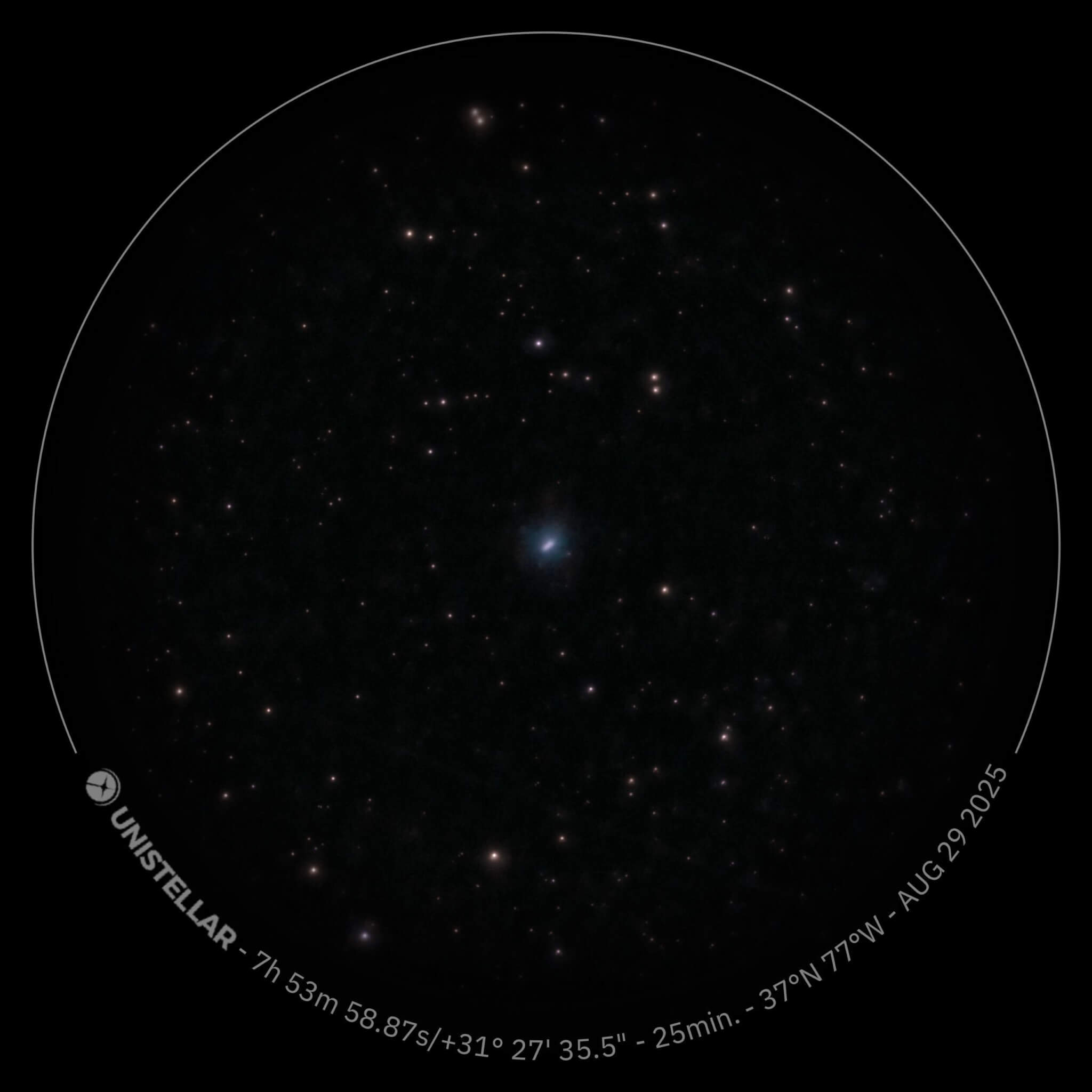
September’s featured target is Comet 3I/ATLAS, our Solar System’s third known interstellar visitor! Although its extreme trajectory won’t bring this comet to its closest solar approach – called perihelion – until late October, September gives us a chance to observe it before it disappears into the Sun’s glare. After a few weeks’ hiatus, it will return in November, when it will actually be better placed for southern hemisphere observers.
Think of September as our “catch it while you can” month: a fleeting chance to spot this rare object before it slips away temporarily.

A light curve showing Unistellar citizen science observations of Comet 3I/ATLAS. This graph shows how the comet’s brigthness is changing, and is expected to change, over time.
Comet 3I/ATLAS Update:
In early November, citizen astronomers were able to observe this interstellar comet again after its visit near the Sun! Margaret Loose was the first to spot it on November 6th (left). Others, like Keven Heider (right) have been monitoring it throughout the month, gathering important data on its activity as this rare object heads out of our Solar System.


October: Comet C/2025 A6 (Lemmon)
October belongs to Comet C/2025 A6 (Lemmon). This comet is expected to brighten dramatically, potentially reaching naked-eye visibility around its closest approach to Earth on October 21st (with perihelion on November 8th).
It will be primarily a northern hemisphere comet during its brightest phase, but its increasing visibility makes it a thrilling target for all observers with access to clear skies.
Comet A6 captured by citizen astronomer Van Ruckman.
November: Comet C/2025 K1 (ATLAS)
Just as Comet Lemmon fades, Comet C/2025 K1 (ATLAS) steps onto the stage. With perihelion on October 8, we’ll be checking in on it post-perihelion in November to see if it survived its close brush with the Sun. If this comet does survive, it’s expected to make its closest approach to Earth on November 26.
This makes November both a scientific and suspenseful month: your observations will help answer the question, “Did the comet survive perihelion?”

Comet K1 captured by citizen astronomer José Donas.
Comet C/2025 K1 Update:
This comet is actively breaking apart! Comet K1 skimmed just 0.3 AU from the Sun during its perihelion on October 8, and then in early November underwent a dramatic outburst. Astronomers have been wondering if the comet would survive all the action. Then on November 10, observations from Teide Observatory revealed two large fragments — clear evidence the comet had split. Just three days later, a third fragment appeared, indicating that the comet is in pieces. Even more exciting, our citizen science community captured the evolving breakup in real time! Citizen astronomers observed all three fragments, tracking this transformation from around the world. Below you can see Comet K1 before, during, and after the fragmentation, but that won’t be all – observations are still coming in as this comet continues to put on a show.
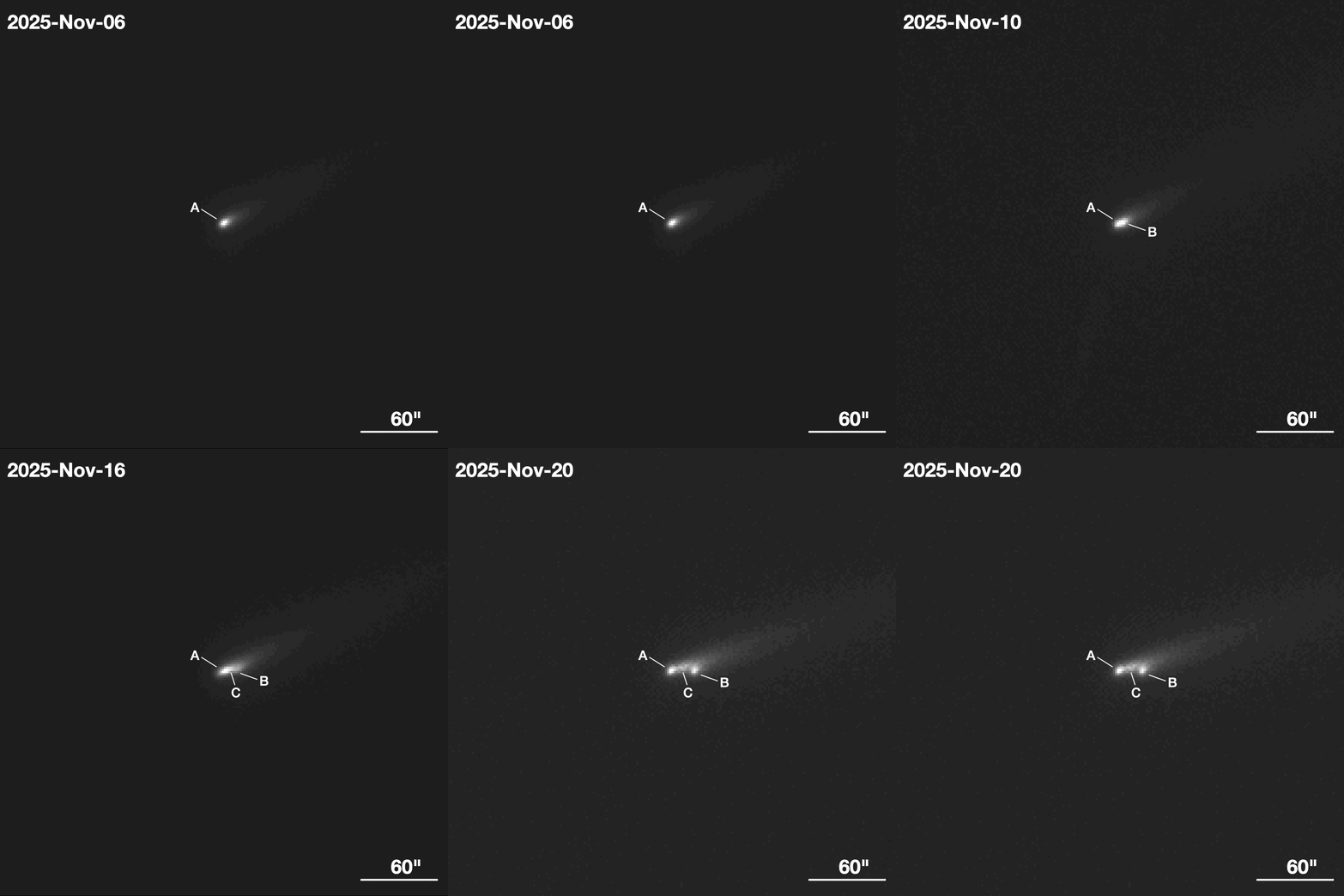

Left: The dramatic breakup of Comet K1! Created by Ariel Graykoski with observations by Petri Kuossari, Kevin Heider, Karen Fischer, Margaret Loose, Keiichi Fukui, and George Ghreichi (US, Finland).
Right: Enhanced image vision of Comet K1 by Claudio Vantaggiato (Italy).
A Season to Remember
Taken together, this sequence gives us three comets in a row:
- September: 3I/ATLAS before it disappears
- October: C/2025 A6 (Lemmon) at its brightest
- November: C/2025 K1 (ATLAS) for a post-perihelion check
For northern observers, this really is an autumn of comets, with back-to-back opportunities to observe these ethereal objects from deep space. But our southern hemisphere friends needn’t feel left out: November brings 3I/ATLAS back in their favor, and the global Unistellar community ensures that every observer’s contribution matters.
Stay tuned as we share images, light curves, and stories from across the network. With three comets on the calendar, this season is shaping up to be one of the most exciting periods for comet hunters in recent memory.
You can learn more about each of these missions on our Cometary Activity Missions page, and review how to make science observations with our Tutorial. Clear skies!