

Cometary Activity
Missions
Find up-to-the-minute visibilities and deeplinks for comet targets on the Comet Ephemeris page.
MISSION 3I
3I/ATLAS (C/2025 N1) is the third confirmed interstellar object. It also has a cometary designation due to its confirmed cometary activity. It’s traveling on a hyperbolic orbit from beyond our solar system and is currently active with a visible dust coma and tail. The comet is faint now but brightening quickly as it approaches the Sun. By tracking its activity before and after perihelion, we can study how a comet from another star system behaves and evolves. This is a rare chance to observe an interstellar comet in detail from the ground.
To observe your target:
Use your smartphone to generate a Deep Link with our comet ephemeris tool. Make at least one recording.For detailed instructions, see the Tutorial → During Observation → B. The Comet is NOT in the App Catalog.

MISSION A6
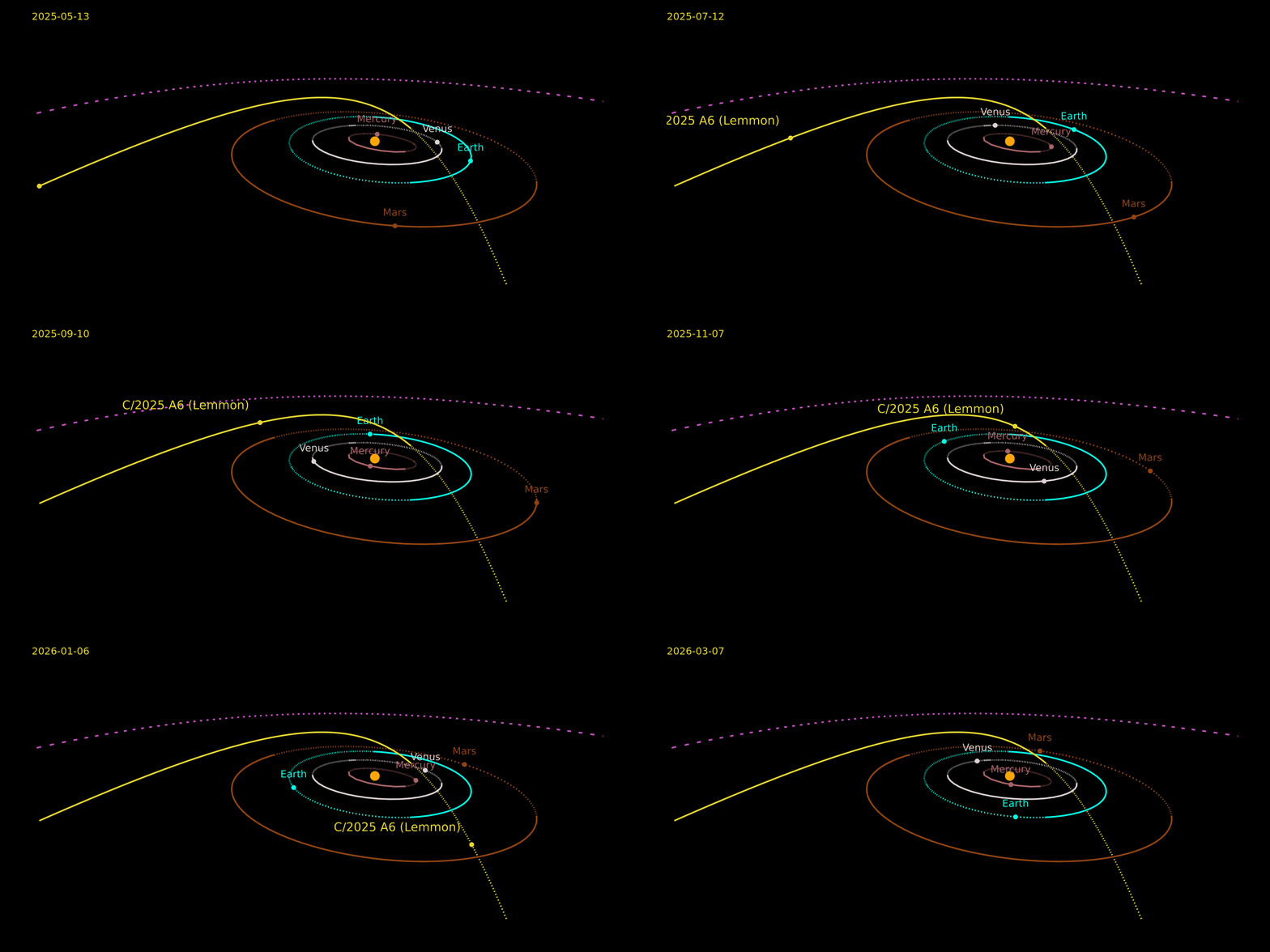
Comet C/2025 A6 (Lemmon) has surprised astronomers with an unexpected surge in brightness. Initially predicted to remain faint throughout its passage through the inner solar system, new observations suggest it may become bright enough to be visible to the naked eye. The comet will make its closest approach to Earth on October 21 and reach perihelion on November 8. Continued monitoring will be essential to understand the cause of this rapid brightening and to track its evolution through the rest of its apparition.
To observe your target:
Use your smartphone to generate a Deep Link with our comet ephemeris tool. Make at least one recording.For detailed instructions, see the Tutorial → During Observation → B. The Comet is NOT in the App Catalog.
MISSION R2
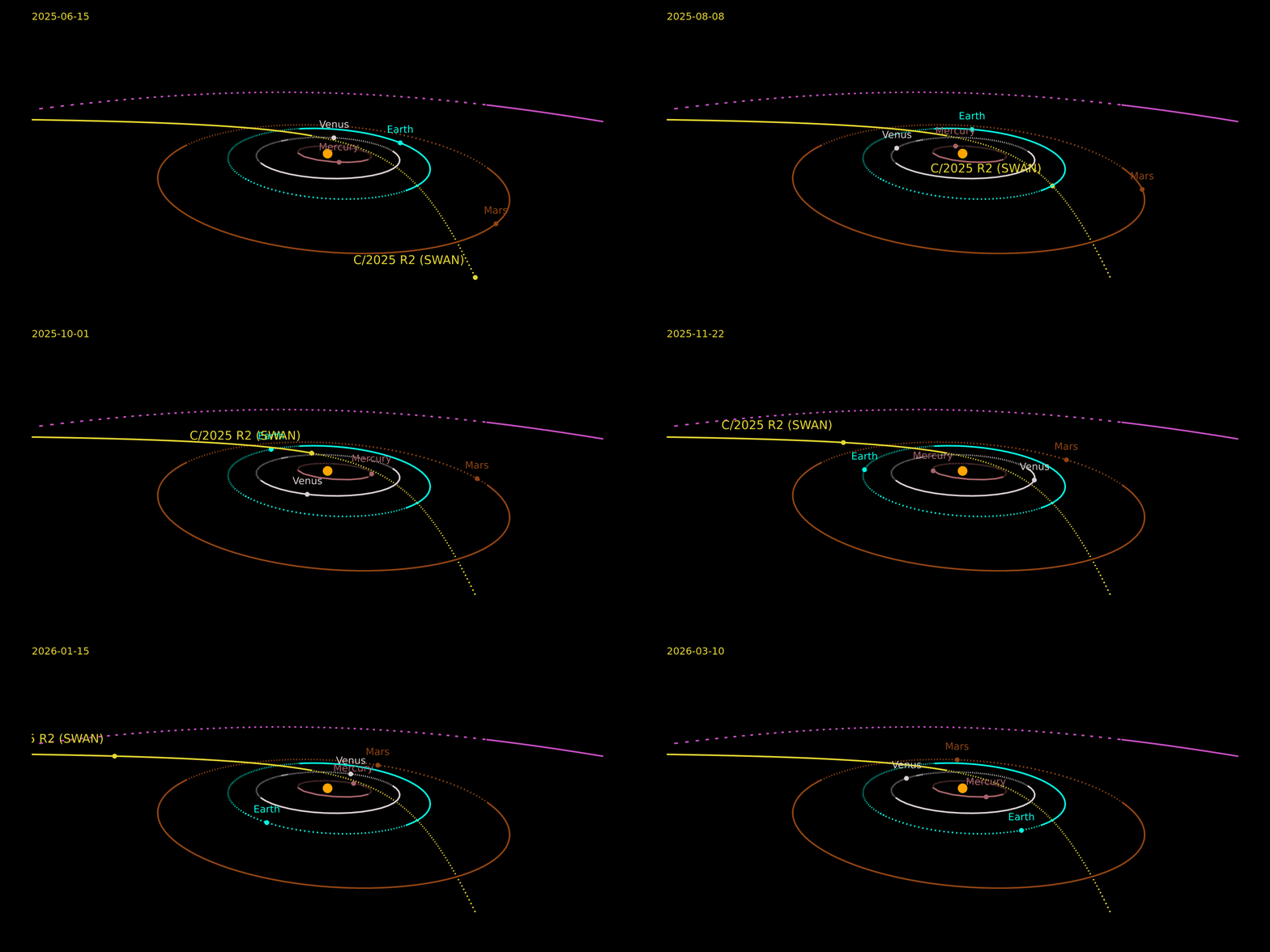
Comet C/2025 R2 (SWAN) is a long-period comet. It reached perihelion on September 12, 2025, only a day after it was discovered! Before that, the comet was hidden in the Sun’s glare and too faint to detect, evading even the most diligent sky surveys. On October 20, 2025, C/2025 R2 made its closest approach to Earth, coinciding with that of Comet C/2025 A6, offering northern-hemisphere observers the rare opportunity to enjoy two bright comets this Fall. Because C/2025 R2 was discovered so late in its journey, we missed observing its brightening phase near perihelion, making it especially valuable to monitor its fading activity as it recedes from the Sun.
To observe your target:
Use your smartphone to generate a Deep Link with our comet ephemeris tool. Make at least one recording.For detailed instructions, see the Tutorial → During Observation → B. The Comet is NOT in the App Catalog.
MISSION K1
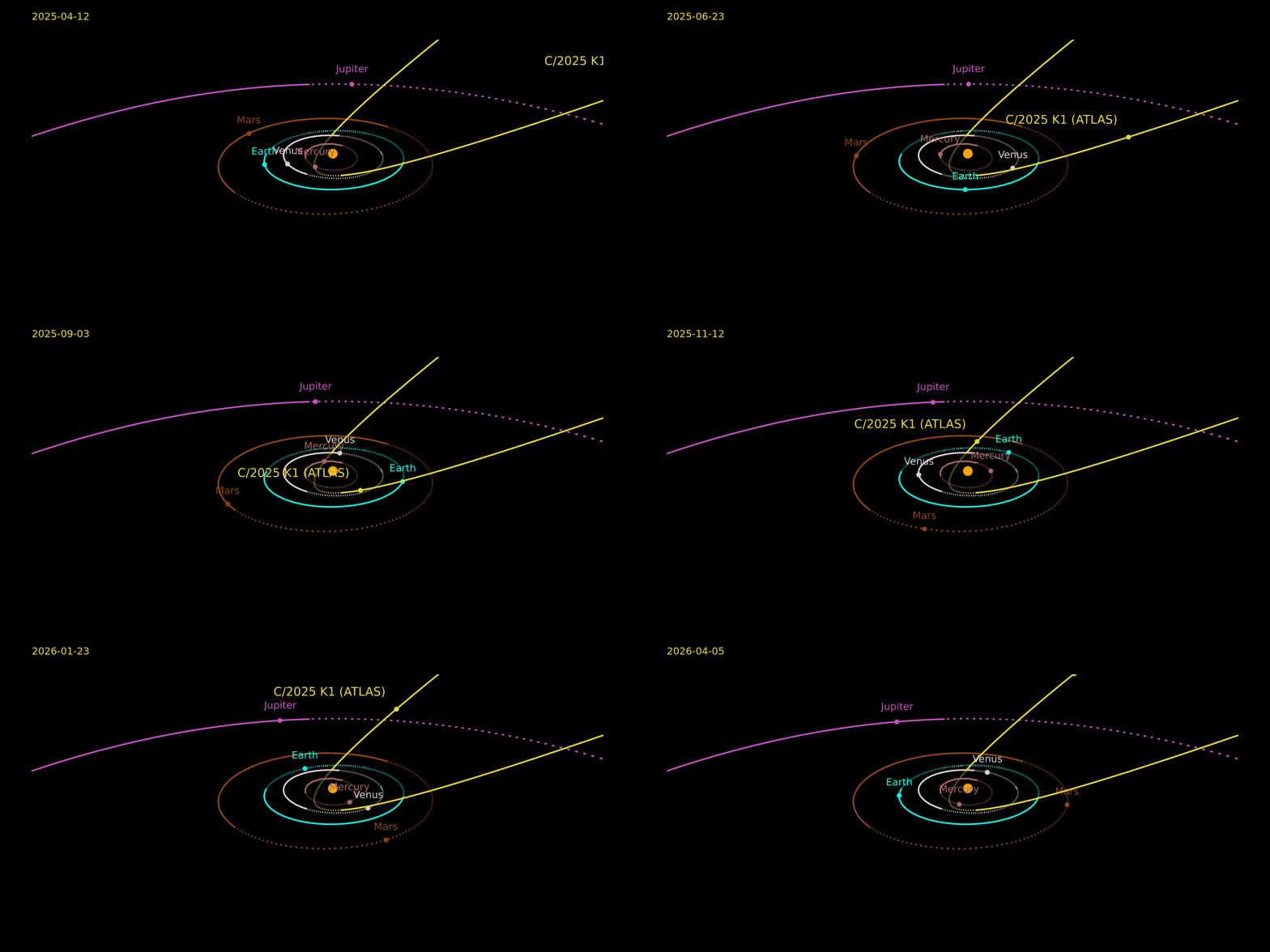
Comet C/2025 K1 (ATLAS) is a dynamically new visitor from the Oort Cloud. It will reach perihelion on October 8, 2025, at just 0.33 AU, so intense heating could threaten its survival. If it remains intact, the comet will make two close approaches to Earth: first on August 13 and again on November 26. Between its dramatic brightening around perihelion and the possibility of disintegration, C/2025 K1 promises to be a particularly compelling target to monitor.
To observe your target:
Use your smartphone to generate a Deep Link with our comet ephemeris tool. Make at least one recording.For detailed instructions, see the Tutorial → During Observation → B. The Comet is NOT in the App Catalog.
MISSION 29P
29P/Schwassmann-Wachmann 1 is a centaur/comet transition object. 29P has experienced many outbursts in its lifetime. By observing this object, we may be able to catch an outbursting event and better understand the mechanisms that cause these sudden increases in brightness. The comet is currently faint, even in recent outbursts, but it is important to monitor occasionally in case the comet undergoes a bright outburst.
To observe your target
Select your comet from the App Catalog (see the Tutorial → During Observation → A. The Comet is in the Catalog).
In the Recording field, enter the following settings:
Record duration: 20 min
Exposure time: 3971 ms
Gain: 25 db
Make at least 2 recordings.

NEW HERE?
New here? Head to our Tutorial for guidance on how to master your Unistellar telescope to become a Comet Watcher.
If you have any questions please contact us at citizenscience@unistellaroptics.com.