

Planetary Defense
Missions
Find up-to-the-minute visibilities and deeplinks for Planetary Defense targets on the Moving Target Ephemeris page and the Scientific Events Prediction page
Near-Earth Asteroid Campaigns
2001 FD58
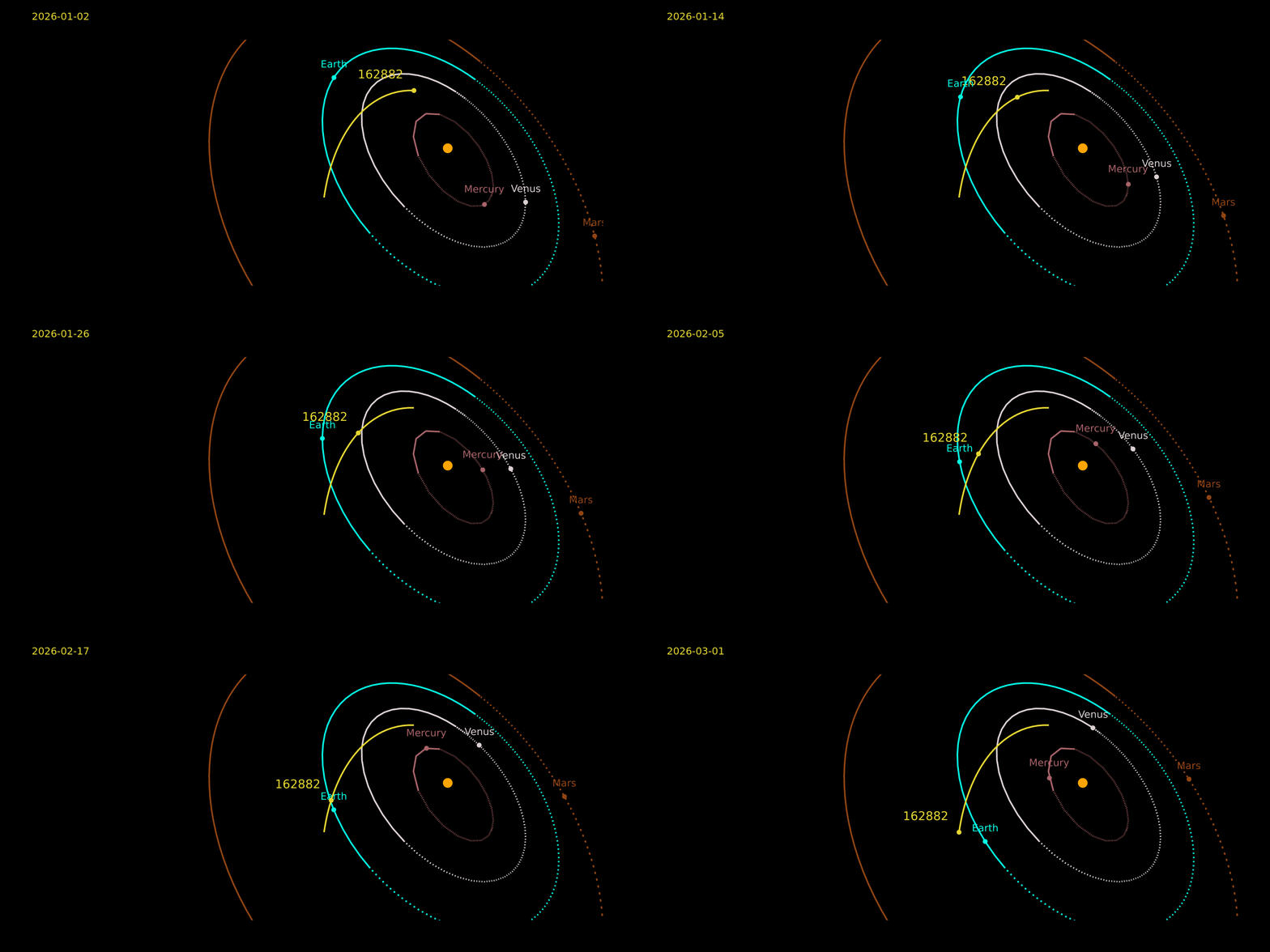
2001 FD58 is a near-Earth asteroid passing approximately 17 lunar distances from Earth on February 14th. The asteroid has a diameter somewhere between 500 and 1,100 meters. 2001 FD58 will be bright enough to observe starting on February 13th and will remain bright enough for the eVscope to see until February 25th.
Main-Belt Campaigns
2033 (Basilea)
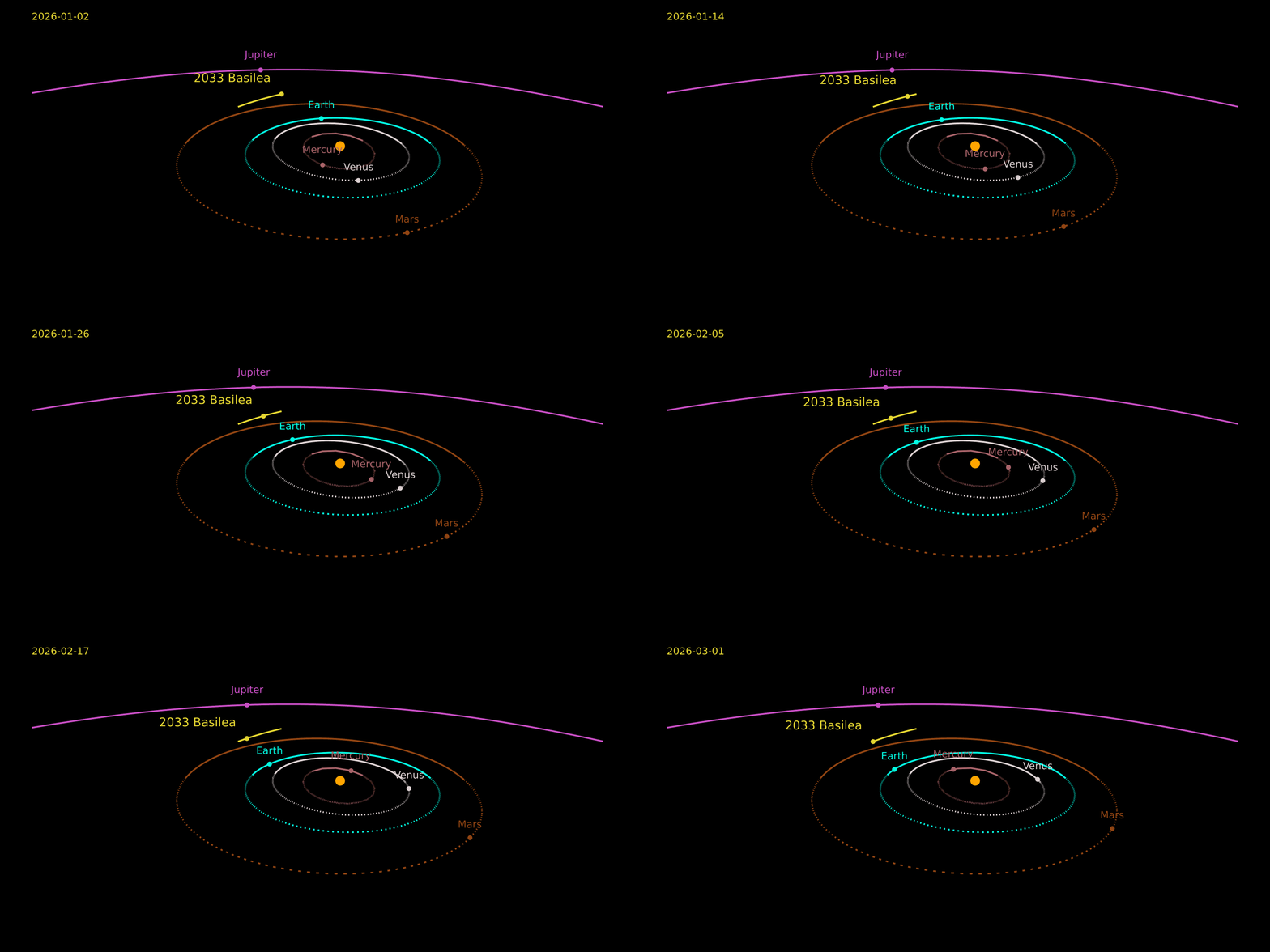
2033 (Basilea) is a roughly 6km diameter asteroid located within the inner portion of the asteroid belt. Its name comes from the city of Basel in Switzerland.
3260 (Vizbor)
3260 (Vizbor) is a main-belt asteroid that is estimated to have a diameter between 7 and 16 km. Discovered in 1974, Vizbor is named after Yuri Vizbor, a Soviet bard.
1796 (Riga)
(1796) Riga is a massive main-belt, some 65-70 km in diameter. With an orbital period of about 6 years, Riga always maintains a distance from the Sun of a little over 3 AU. It poses no threat to Earth, but it is an interesting object to study nonetheless.
NEW HERE?
Head to our Tutorial for guidance on how to master your Unistellar telescope to become a Planetary Guardian. If you have any questions please contact us at citizenscience@unistellaroptics.com.